GCSE Natural History Is Coming: What the New Subject Actually Involves and Who It's For
What's just happened
The Department for Education has opened a 12-week public consultation on the proposed subject content for a new GCSE in Natural History. The consultation invites views on the proposed subject content for a new GCSE in natural history, and pupils, parents and teachers can share their views via the government consultation, running from 9.30am on Friday 12 June to Friday 4 September.
The headlines have been broadly enthusiastic — a "landmark qualification", the chance to reconnect children with the natural world — but parents whose children are choosing options now want something more practical. What does the subject actually cover? Who will examine it? When will real schools be able to offer it? And is it a sensible pick for a Year 9 child?
What the GCSE actually covers
The proposed content is structured around three core areas. The core areas of study will be UK wildlife and habitats; human influence on the natural world; and climate change, biodiversity loss and conservation.
That breaks down, broadly, into the following:
- UK habitats and wildlife. A deep understanding of UK habitats and wildlife pupils will find around them – urban, freshwater, woodland, grassland, farmland and marine. Pupils will be taught to identify species and use scientific tools such as taxonomic keys (the branching identification charts naturalists use to name a plant or animal) and food webs.
- Human influence on the natural world. The subject content will examine human influences on the natural world, such as urbanisation, fishing and deforestation, as well as conservation approaches, while exploring how everyday actions – from wildlife-friendly gardens to reduced consumption – can make a difference.
- Climate, biodiversity and conservation science. The science behind climate change, the causes of biodiversity loss, and the methods conservationists use to protect ecosystems.
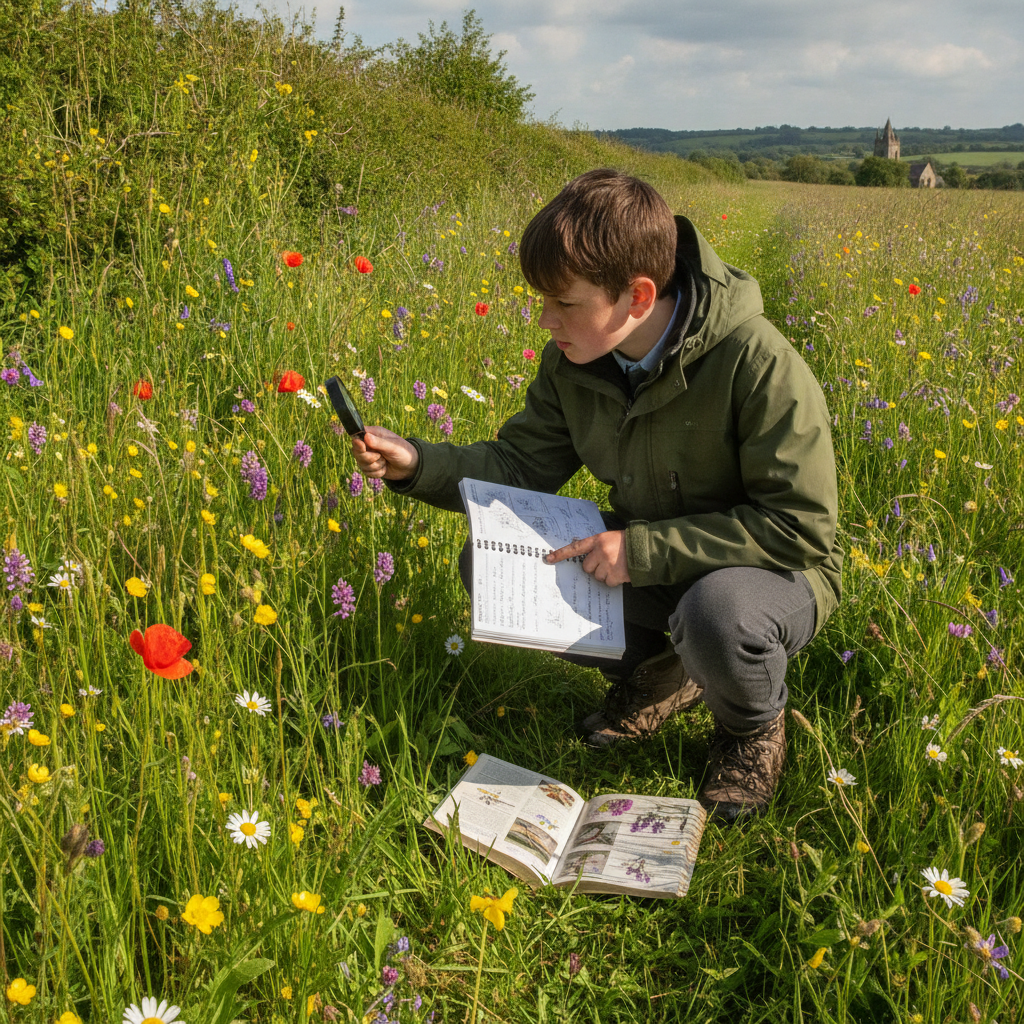
The other distinctive feature is fieldwork. It is proposed that natural history GCSE students will spend a minimum of 20 hours learning outdoors, exploring "real habitats, from urban parks to coastal salt marshes". Schools are also being encouraged to make use of their own grounds, which means a Year 10 or 11 cohort might spend a noticeable chunk of lessons outside with clipboards rather than in a lab.
This is not, in other words, a relabelled biology paper. It overlaps with GCSE Biology and GCSE Geography in places, but the centre of gravity is observation, recording and species identification — skills closer to those of a working naturalist or ecologist than a lab scientist.
Which exam board will offer it
The qualification has been led from the start by OCR (Oxford, Cambridge and RSA). OCR was approached by naturalist Mary Colwell, who spearheaded the campaign to address the gap in natural history content in education, and the board has been developing the framework with her and others over several years. The conservation charity Born Free has stated that the qualification "will be available through Cambridge OCR" once complete.
Other boards may, in principle, follow once the subject content is finalised, but at the point of writing OCR is the only board publicly working on a specification.
When children will actually be able to sit it
This is where parents need to read carefully, because the timeline has slipped before. The aim was to introduce it by 2025, pending approval from exams regulator Ofqual, but Schools Week understands the sign-off process was stalled earlier in the previous parliament.
The current expectation is later than that. Schools Week reports that the qualification is set to be taught in schools at the same time as the revised GCSEs following the curriculum and assessment review, which is expected to be in 2028. First exams would therefore fall in summer 2030.
A practical translation for parents:
- A child currently in Year 9 choosing options for September 2026 will almost certainly not be able to take Natural History as one of their GCSEs. They will sit the existing suite of subjects.
- A child currently in Year 7 or below is the first realistic cohort. Even then, take-up will depend on whether their school decides to offer it — and many won't, at least at first, because of timetable and staffing pressures.
Is it worth considering for a Year 9 child choosing options now?
Honestly: only as a thought experiment. The GCSE will not be available in time for them, so the more useful question is what to do if your child is genuinely drawn to natural history and the environment.
A few sensible routes:
- GCSE Biology (separately or as part of Combined Science) remains the strongest academic foundation for any career in ecology, conservation or environmental science. Universities running zoology and ecology degrees will expect it.
- GCSE Geography covers ecosystems, climate change and human impact on the environment, and most specifications include fieldwork. For a child whose interest is in habitats and conservation policy rather than cellular biology, it is often the better fit.
- Outside the classroom: local Wildlife Trust youth groups, the RSPB's Wild Challenge, Field Studies Council short courses, and the John Muir Award all offer the kind of recorded, structured outdoor learning that universities and employers recognise.
If your child is in Year 7 or 8 and Natural History looks like a serious possibility for them, it's worth asking the school directly whether they intend to offer it once available. Schools will need teachers comfortable leading regular fieldwork, suitable green space within reach, and the timetable flexibility to make 20-plus hours outdoors workable. Not every school will say yes.
How seriously universities and employers will take it
Too early to tell, in candour. New GCSEs take a few cohorts to build a reputation, and admissions tutors won't have a settled view until the first results come through in 2030 or later. What we can say is that it has been designed with green careers explicitly in mind — the DfE's own announcement frames it as preparation for "the next generation of green careers" — and that bodies like the Field Studies Council and the Natural History Museum have backed it publicly.
For a child who already loves the outdoors, it is likely to be a rewarding course. For a child choosing GCSEs purely on perceived prestige, the established sciences will remain the safer bet for some years yet.
What parents can do now
If your child is in Year 9 and choosing options this academic year, the new GCSE is not on the table for them — focus on Biology and Geography if their interests lean that way.
If your child is younger and the subject sounds like a fit, the consultation itself is open to the public. The 12-week government consultation runs until Friday 4 September, and parents are explicitly among those the DfE is asking to respond. The proposed subject content document is published on the gov.uk consultations page; reading it gives a much clearer picture of what the GCSE will actually feel like in a classroom than any news report will.
And in the meantime, the best preparation costs nothing: a pair of wellies, a local nature reserve, and the habit of paying attention to what's actually living in the hedge at the end of the road.