The Government's Screen Time Review: What It Could Mean for Your Child's School Day
What the government has actually announced
The Department for Education and the Department of Health and Social Care have launched a review of how children aged 5 to 16 use screens — both at home and in the classroom. The government has launched a three‑week call for evidence to inform the guidance, which will be published this autumn.
This is a broader piece of work than the existing rules on mobile phones. It covers parental guidance on smartphones, social media and sleep, but also looks at the technology schools themselves choose to use — including generative AI tools and the filtering and monitoring systems that sit behind every school network.
The call for evidence closes at 11:59pm on 29 June 2026, and the resulting parental guidance is due in the autumn term. Separately, ministers will consult later this year on new independent safety certification for some types of technology used in schools, including generative AI and filtering and monitoring products.
What the review actually covers
The review has two strands that parents should not confuse with one another.
Strand one: guidance for parents
The advice, aimed at families with children aged 5 to 16, will cover topics including smartphones, social media, sleep, learning and healthy digital habits. It follows growing concern among parents about balancing the benefits of technology with its potential risks. The DfE and DHSC have said the guidance will be practical rather than prescriptive — it is not expected to set hard limits on minutes per day. It may include advice on when a child should get their first smartphone.
The work is being shaped by an independent expert panel. It will be informed by an independent expert group co‑chaired by Children's Commissioner Dame Rachel de Souza and Professor Russell Viner.
Strand two: the technology schools buy
The more significant change for the school day is on the procurement side. At the moment, head teachers choose AI tutoring tools, revision platforms, filtering software and monitoring systems from a fragmented market with little independent assurance.
Later this year, the government will consult on proposals for independent safety certification for some technologies used in schools, including generative AI tools and filtering and monitoring systems. In addition, work is underway to develop a framework outlining what safe, effective and high-quality technology products should look like in educational settings.
There is also a parallel piece of work on AI tutoring. The government is also working with schools and technology providers to develop AI-enabled tools that could expand access to tutoring and learning support for disadvantaged pupils. According to the DfE press notice, the aim is to help children benefit from digital innovation while providing parents, carers and education professionals with confidence that technology used in schools is evidence-based, appropriate and supports positive outcomes for children.
How this sits alongside the existing phone ban
It is worth being clear about what is already in force, because the new review does not replace it.
Most schools in England already prohibit phone use during the school day, under the 2024 non-statutory DfE guidance. The Education Secretary, Bridget Phillipson, has written to head teachers reinforcing the position and has resisted calls for a separate statutory national ban, arguing that schools already have the powers they need. Ofsted has begun checking phone policies during inspections.
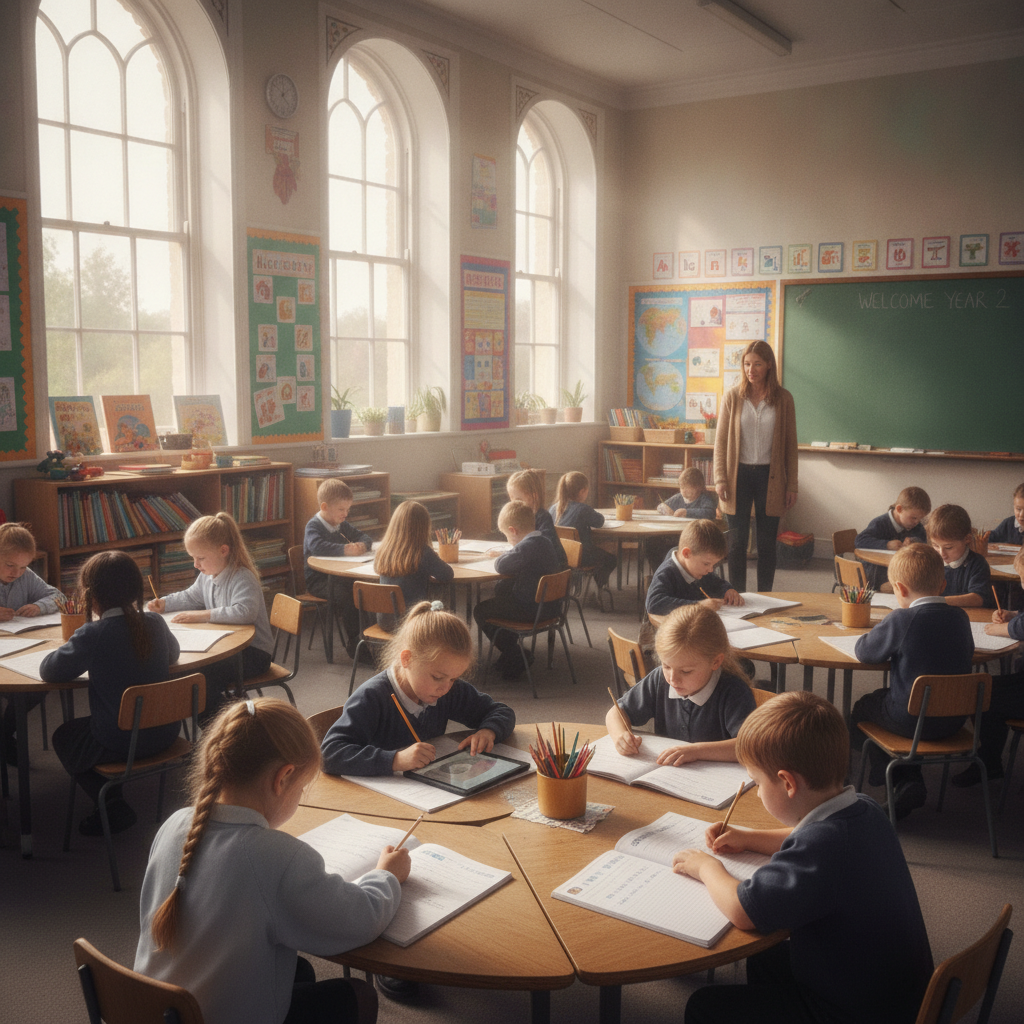
The screen time review goes further than phones. It asks what should happen with the devices schools actively give children — the iPads, Chromebooks, AI maths platforms and reading apps that have become routine in many classrooms.
What parents can realistically expect before September
This is where it pays to be honest. The timeline does not allow for major change before the autumn term:
- The parental guidance will not be published until autumn 2026. Parents won't have a finalised DfE document on screen use in time for the start of the school year.
- The safety certification scheme is still at consultation stage. Even once consulted on, a certification regime takes time to build. Schools will not be choosing from a list of "DfE-certified" AI tools in September.
- AI tutoring tools developed under the DfE programme are not imminent. The press notice says up to eight companies will work with partner schools to develop safe and effective products, with successful tools being made available to schools from 2027.
- The existing phone rules continue unchanged. Whatever your child's school does about phones today, it will almost certainly do in September.
In short: expect more conversation about screens in schools — at the gates, in newsletters, possibly in PTA meetings — but very little concrete change to the school day itself in the short term.
What may shift in the medium term
Looking past September, parents should expect three gradual changes:
- Clearer national advice on smartphones and social media for the 5–16 age range, which schools are likely to lean on when responding to parental queries.
- More scrutiny of classroom technology procurement. Once a certification framework lands, head teachers will face pressure to choose tools that have been independently checked. Some current apps may quietly disappear from school networks.
- Approved AI tutoring becoming available through schools from 2027. This is aimed particularly at disadvantaged pupils, but the wider effect will be to make AI-assisted learning a normal part of the school offer.
What you can usefully do now
If you want to engage with the review rather than wait for it, two practical steps:
- Read the call for evidence on gov.uk. It is open to parents as well as researchers, and the consultation window is short.
- Ask your child's school what classroom technology they currently use — particularly any AI tools, and how pupil data is handled. Schools should be able to tell you which platforms are in use and what filtering and monitoring sits behind them.
For most families, the immediate question — what to do about a child's own screen use at home — won't be answered by Whitehall before the new school year. The review is real and substantial, but its effects on the school day will arrive slowly, and largely in 2027 rather than September 2026.