Digital GCSE Exams Are Coming — What Parents of Current Year 9 and 10 Students Need to Know Now
The story so far
Colin Hughes, chief executive of AQA — England's largest exam board — has told Tes that public concerns about moving GCSEs on-screen do not "stack up", and that the wider system lacks urgency about making the switch. He says AQA would be ready to deliver digital exams "tomorrow morning" if asked, though the practical transition would need to be phased.
That interview lands alongside a bigger regulatory shift. In December 2025, Ofqual launched a consultation on how on-screen GCSE, AS-level and A-level exams could be regulated in the future, and its chief regulator Sir Ian Bauckham said on-screen exams could be introduced for some GCSE and A-level subjects by 2030. Ofqual plans to allow exam boards to introduce up to two on-screen specifications for GCSEs and A-level qualifications with less than 100,000 entries per year.
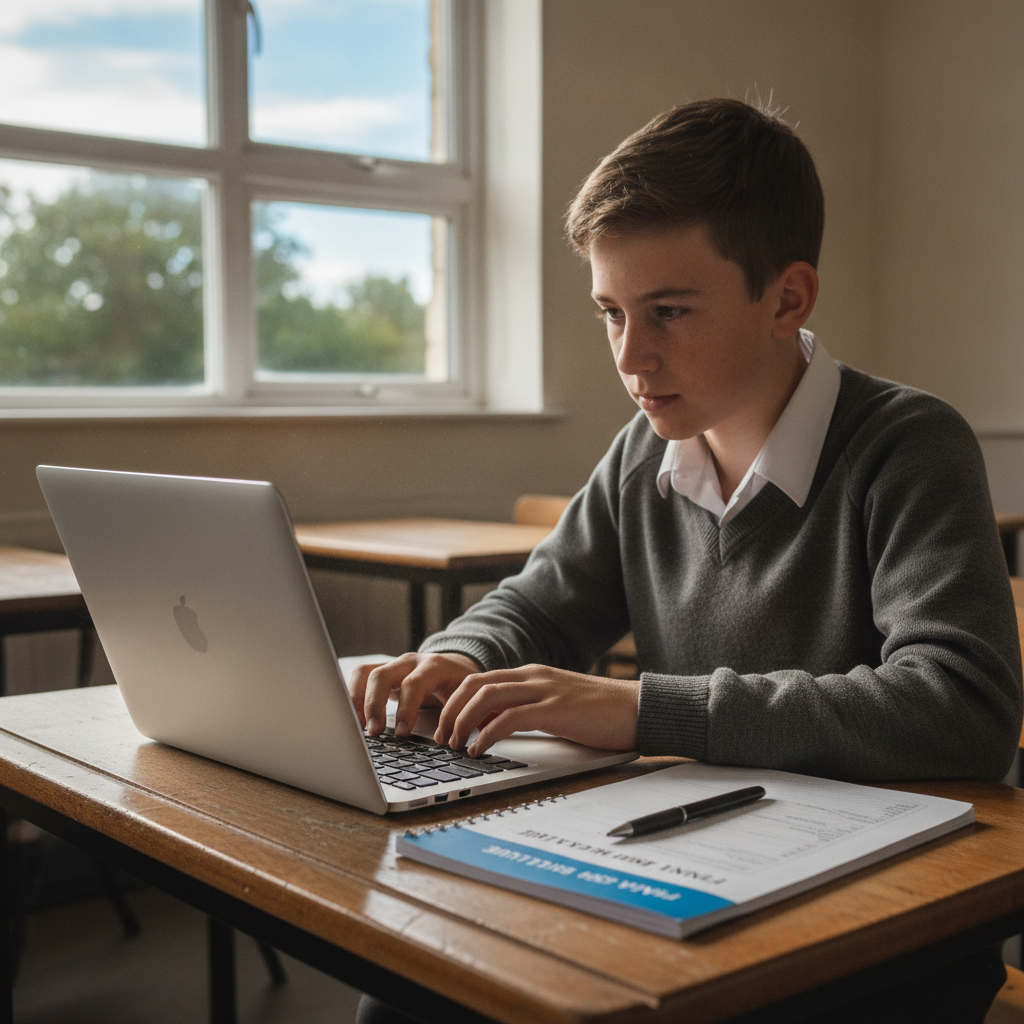
For parents of children currently in Year 9 and Year 10, that timing matters. Your child will not sit an all-digital GCSE. But they may well sit one or two on-screen papers before they finish school, and the skills that reward them in those papers are worth building now.
Which subjects are moving first
The move is starting at the edges of the timetable, not the middle. Ofqual has been explicit that the largest, highest-entry subjects — English, maths, the sciences, history — are staying on paper for now. Ofqual has said digital exams are unlikely in the most popular subjects for the "foreseeable future".
Instead, the first candidates are smaller subjects where the logistics are manageable:
- Modern foreign languages, particularly the less-entered ones. AQA has proposed that the reading and listening components of GCSE Italian and Polish should be the first to be sat digitally, with digital mocks from 2025, followed by exams from 2026 if regulators approve the plan. That timeline has already slipped once, and any 2026 or 2027 start would only affect a small number of centres.
- English language and literature at Pearson Edexcel. Up to 125,000 students will have the option to take GCSE English Language and English Literature exams onscreen for the first time with Pearson Edexcel in summer 2025. By 2030, Pearson Edexcel will also offer an onscreen option for all GCSEs. Crucially, this is an option offered to schools, not a mandate for pupils.
The key word throughout is option. Ofqual has made it clear that on-screen and paper versions would be offered as completely separate qualifications with different questions to maintain standards and transparency. Schools choose whether to enter their pupils for the on-screen version. Individual families generally will not.
The likely timetable
Piecing together what the exam boards and the regulator have said, a realistic picture looks like this:
- 2025–2027: A small number of schools opt in to digital versions of English (Pearson Edexcel) and, if approved, languages such as Italian and Polish (AQA). Most pupils sit unchanged paper exams.
- 2028–2030: Wider optional roll-out across more minor subjects. Pearson Edexcel has set out a plan to have all of its GCSEs available on-screen by 2030, though "available" is not the same as "compulsory".
- 2030 onwards: Larger subjects begin to appear on-screen, but slowly. AQA's Colin Hughes has previously told Tes that a fully digital version of a major subject may not be ready until at least 2035.
In practical terms: a child in Year 9 in November 2025 will sit their GCSEs in summer 2029. It is entirely possible one or two of their papers — most likely in a modern foreign language, or in English if their school opts in — will be on a screen. It is very unlikely their maths or science papers will be.
What on-screen exams actually reward
The debate about digital exams is not really about the machines. It is about which pupils happen to do their best thinking on one.
On-screen papers tend to favour children who:
- Type quickly and accurately. For a 40-minute reading response, the difference between 25 and 45 words per minute is significant. Handwriting speed matters far less on-screen.
- Read fluently from a screen. Scrolling, splitting attention between a question and a source text, and re-reading without losing your place are learned skills.
- Are comfortable with basic on-screen navigation. Highlighting, flagging a question to return to, and using a simple text editor without being distracted by it.
- Can plan without the reassurance of paper. Many pupils plan essays by scribbling in the margin. On-screen, that habit has to be replaced with a planning box or a mental structure.
None of this is about being "good with computers" in a general sense. A child who spends hours on TikTok is not necessarily well prepared for a two-hour on-screen English paper. The skills are specific.
There is also a genuine equity concern that parents should be aware of. In the most economically deprived areas, 86 per cent of teachers surveyed believe their students do not have enough access to technology at home to prepare for digital exams. Ofqual has partially addressed this: it is also proposing that devices to take exams on screen would need to be provided, rather than allowing students to use their own personal phones, laptops or tablets. But provision in the exam hall does not solve unequal practice before it.
The one practical thing to do now
If you do one thing this year, make it this: find out whether your child can touch-type at a reasonable speed, and if not, help them learn.
It sounds mundane. It is also the single skill most likely to matter across every version of on-screen assessment now being planned. A pupil who can type at 40 words per minute without looking at the keyboard has a genuine advantage over one who hunts and pecks — not just in exams, but in coursework, university applications and virtually any future workplace.
Free typing programmes such as BBC Bitesize's Dance Mat Typing (for younger children) and Typing.com or TypingClub (for older ones) are perfectly adequate. Fifteen minutes, three or four times a week for a term, is usually enough to move a child from slow to competent.
Beyond typing, a few quieter habits help:
- Ask your child's school, at the next parents' evening, whether they are considering any on-screen entries for the current Year 9 or Year 10 cohort. Most will say no. A minority will say yes, and you will want to know.
- If English is a likely candidate at your child's school, get them practising extended writing directly onto a screen occasionally, not always by hand.
- For pupils taking a less-common language GCSE (Italian, Polish, Mandarin, Portuguese and similar), ask specifically whether the reading and listening papers will be on-screen. This is where change is most likely to arrive first.
The honest summary
Digital GCSEs are coming, but not quickly and not everywhere at once. The alarmist framing — that today's Year 9s will suddenly be marched into computer suites in 2028 — is not what the exam boards or Ofqual are actually planning. The quieter reality is that a handful of subjects will move first, most pupils will still sit paper exams for their core subjects, and the pupils who cope best on-screen will be those whose typing and screen-reading habits were built long before the exam hall.
That is a problem tutoring can help with only in a narrow sense — a good English or languages tutor can and should build in on-screen practice where a school's chosen exam board offers it. But the bigger fix is domestic. A child who spends a term learning to type properly will be better prepared for the next decade of assessment than one who does not, whichever way the paper-versus-screen debate finally settles.