GCSE French and Spanish: Why Year 10 Is the Year Most Students Fall Behind — and How to Stop It
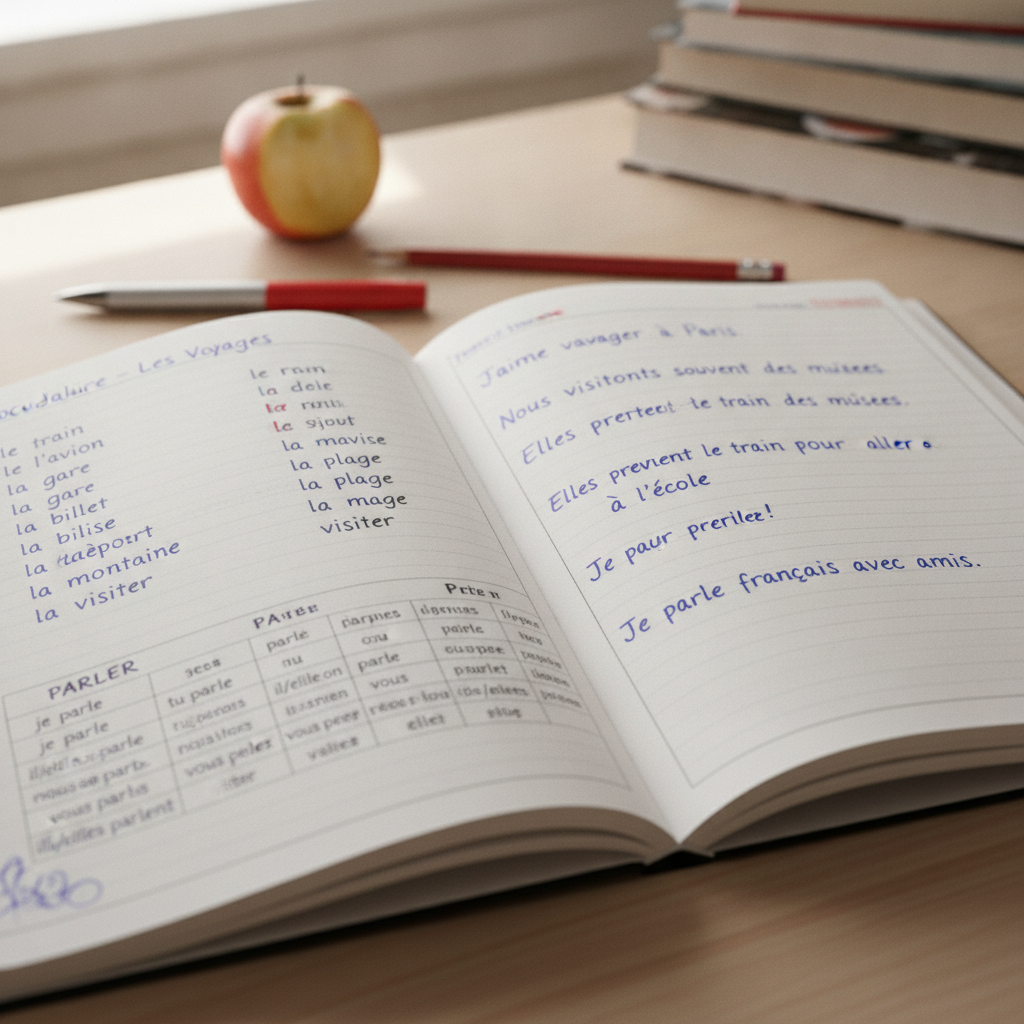
Most parents notice the shift around November of Year 10. The French or Spanish exercise book that used to come home with ticks and encouraging comments starts coming back with a lot of red pen. Homework takes twice as long. The child who chose the language because they enjoyed it in Year 9 now says they hate it.
This is not a coincidence, and it is not usually about ability. The GCSE Modern Foreign Languages (MFL) course asks something quite different from what Key Stage 3 asks, and the transition happens faster than most families expect.
What changes between KS3 and GCSE
At Key Stage 3, MFL lessons reward participation, curiosity and rough communication. A pupil who can string together "Je vais au cinéma avec mes amis le weekend" with a couple of errors gets praised — rightly, because at that stage the point is confidence and exposure.
GCSE is a different exam. The current specifications (AQA, Edexcel, Pearson Edexcel International, Eduqas) all assess four skills equally: listening, speaking, reading and writing, each worth 25%. From 2026, the reformed GCSE MFL specifications (introduced for first teaching in September 2024) narrow the prescribed vocabulary list to around 1,200 words at Foundation and 1,700 at Higher — but crucially, students are expected to know those words actively, not just recognise them. Grammar is examined more explicitly than before, and dictionaries are not allowed in any paper.
The shift, in practical terms:
- Vocabulary load roughly triples between the end of Year 9 and the end of Year 10.
- Accuracy starts to matter more than fluency. A confident sentence with the wrong verb ending loses marks a hesitant, correct one keeps.
- Speaking assessments begin in Year 10 at many schools, often with a mock role-play or photo card by the summer term.
- Grammar is tested directly, including tenses students may have only met briefly at KS3 (subjunctive in Spanish, imperfect vs perfect distinction in French, pluperfect, conditional).
The three most common failure points
1. Vocabulary is learned passively, not actively
Most Year 10 students revise vocabulary by reading through a list, or by using an app that shows them the English and asks them to tap the French. This builds recognition — enough to muddle through a reading paper — but not production. When it comes to writing or speaking, the word simply isn't there.
Active recall is the fix. That means covering the English, writing the French from memory, then checking. It is slower, more uncomfortable, and roughly three times more effective. Twenty words learned this way beats sixty words skimmed.
2. Writing is treated as translation from English
A common Year 10 habit: think of what you want to say in English, then translate word by word. This produces sentences the mark scheme punishes — anglicised word order, missing agreements, wrong prepositions, tenses that don't exist in the target language.
GCSE writing rewards students who build sentences from structures they already own. A pupil who has ten reliable sentence frames ("Si j'avais le temps, je…", "Ce que j'aime le plus, c'est…", "Bien que ce soit difficile, …") will out-score a pupil with a larger vocabulary but no scaffolding. Teaching this shift — from translation to construction — is one of the single biggest gains available in Year 10.
3. Speaking practice is left until the mock
Speaking is the skill parents hear least about, because it is the hardest to practise at home if you don't speak the language. But it is 25% of the grade, and the format is demanding: a role-play, a photo card description, and a general conversation on two themes, all delivered under time pressure with an examiner (usually the class teacher) recording.
Students who leave speaking practice until the school mock in Year 11 almost always underperform relative to their written work. The habit of speaking aloud — even to a mirror, even badly — needs to be built through Year 10, not crammed in the term before.
What structured practice outside school looks like
Schools have limited time. A typical Year 10 gets three or four MFL lessons a week, and those lessons must cover new content, past-paper technique, speaking practice and marking. There is rarely enough time for the drilling that builds real fluency.
Effective home practice for GCSE MFL — whether the child works alone, with a parent, or with a tutor — has a few consistent features:
- Short and daily beats long and weekly. Fifteen minutes of vocabulary six days a week produces far more than a ninety-minute Sunday session.
- Written output every week. A 90-word paragraph (Foundation) or 150-word piece (Higher) on a past-paper title, marked against the actual criteria, is worth more than any amount of reading.
- Speaking aloud, on a timer. Photo card questions can be practised in five-minute bursts. The goal is fluency under pressure, not perfection.
- Grammar drilled little and often. Verb tables, agreements, and the handful of tricky structures (French object pronouns, Spanish ser vs estar and por vs para) reward regular short exposure.
This is the point at which many families consider a tutor, and MFL is one of the subjects where one-to-one work pays off quickly — largely because a tutor can do the two things a classroom teacher of thirty cannot: listen to the child speak for a full hour, and mark every sentence they write. If the issue is confidence or a specific gap (usually grammar or speaking), a term of weekly sessions in Year 10 typically achieves more than a crash course in Year 11.
What parents can do without speaking the language
You do not need to speak French or Spanish to help. What matters is asking the right questions:
- Ask to see the vocabulary list for the current topic. Test them on it — English to target language, not the other way round.
- Ask them to read a piece of their written work aloud. If they can't read it fluently, they can't say it in the exam.
- Ask what tenses they used in their last piece of writing. If the answer is "just the present", that is a Grade 4 answer at best.
- Ask when their next speaking assessment is, and what format it will take. Most Year 10 students genuinely don't know.
The short version
Year 10 MFL is where the enthusiasm of KS3 meets the accuracy demands of GCSE, and the gap between the two catches out capable students every year. The fix is not more effort in the same direction — it is a shift in how vocabulary is learned, how writing is built, and when speaking practice starts. Any of those changes made in the autumn term of Year 10 will still be paying dividends in the summer of Year 11.